
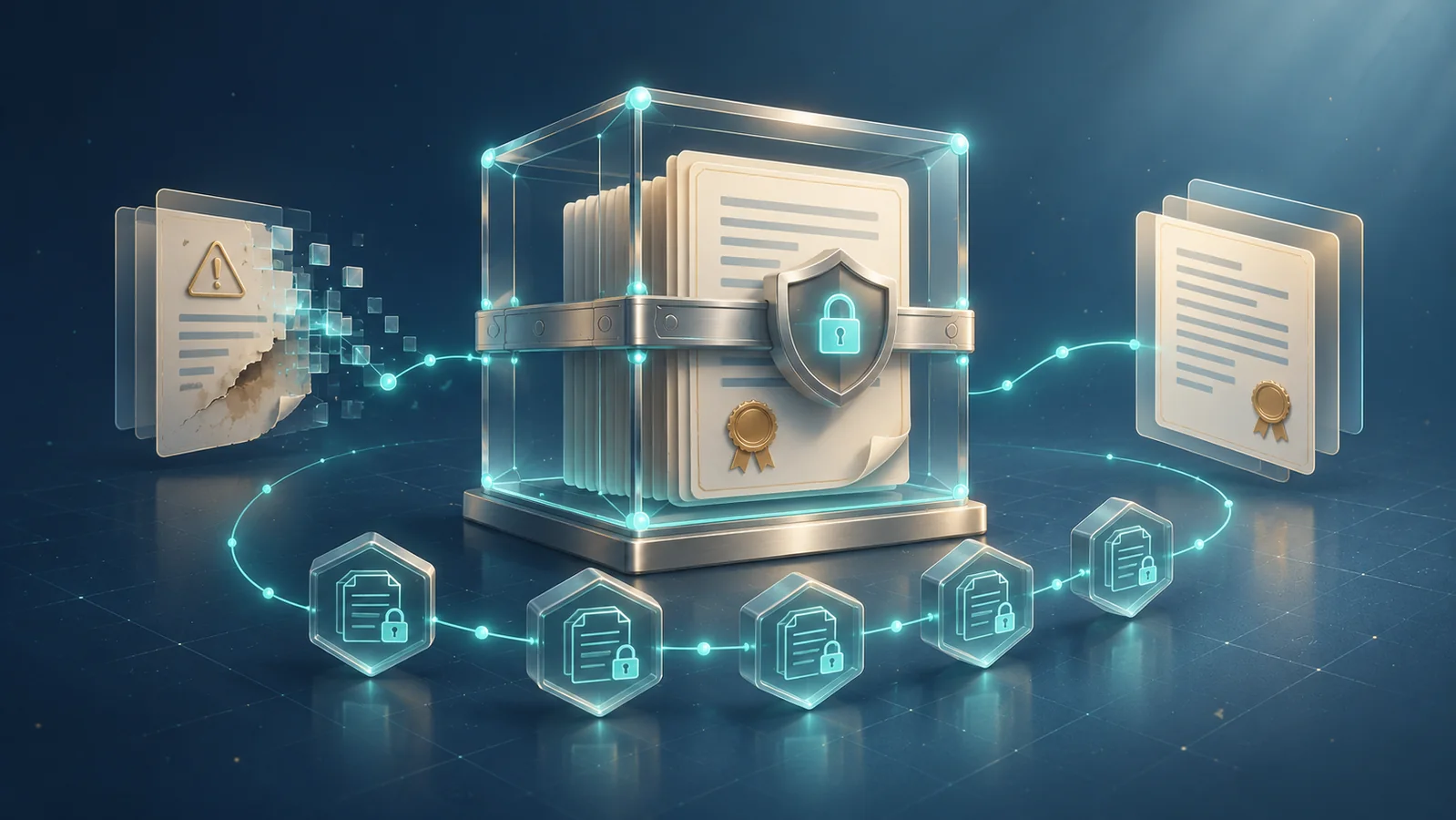
For decades, immutability — the guarantee that data cannot be modified or deleted — was perceived as a technical constraint reserved for banking archives and legal logs. Immutability is no longer limited to those uses.
Why every storage system is becoming a target
Attackers are no longer just seeking to encrypt data: they aim to destroy, modify, or permanently corrupt it. Backups themselves have become priority targets.
In this context, mutable data is vulnerable data.
What immutability guarantees
When data is immutable, several essential properties are guaranteed:
- it cannot be altered retrospectively;
- it cannot be silently deleted;
- its previous versions always remain available;
- it constitutes admissible evidence;
- it resists administrator account compromises.
Use cases beyond compliance
Immutability is not merely a legal requirement. It also provides:
- protection against human error;
- unambiguous restoration capabilities;
- a stable reference for forensic analysis;
- a sound foundation for artificial intelligence models;
- a guarantee of documentary continuity.
Combining immutability with temporal storage
Immutability alone is not enough. It must be combined with temporal logic, enabling navigation through the history of the data.
This combination defines KARL: storage that is both immutable and navigable in time, where every state is preserved and accessible.
The guarantee is:
No critical data can be lost, modified, or rendered unavailable without leaving a trace.
To learn more
To learn more:
Read the Challenges article on KARL →