

On 2 June 2026, a conversational assistant tells a policyholder that the damage from her water leak is excluded from her cover. The next day, a supervisor flags the answer as potentially wrong. The question is not whether the agent is reliable in general: it is exactly which document, and which version, it read that day.
The scenario is fictional but representative of the questions AI platform and support teams ask today. It focuses on AI transparency and shows how KARL Core answers: state versioning, a temporal graph of objects and governed retrieval.
The setting: Ondaria Mutuelle and the NOA assistant
Ondaria Mutuelle is an insurer that delegates part of first-level claims handling to NOA, a conversational assistant that answers policyholders’ questions based on contractual documentation and the benefit sheets in force. NOA runs on KARL Core: every conversation, every reference document and every execution is kept as a governed resource.
On 2 June 2026, NOA tells Ms Reynard that the damage from her water leak is excluded from her cover. The next day, a supervisor flags the answer as potentially wrong: an earlier version of the documentation was more favourable, and nothing obviously guarantees which version NOA actually consulted.
What follows retraces, screen by screen, the path taken by the AI platform team in KARL MX to establish, without ambiguity, what NOA actually knew at the moment it answered.
The foundation: the Memory Layer
A conversation is not a simple message history that gets appended to. It is a persistent identity — conversation_client / CONV-2026-33418 — where every step produces a new state, dated and retained: the message received, the context retrieved, the generated answer, then the supervisor’s flag.
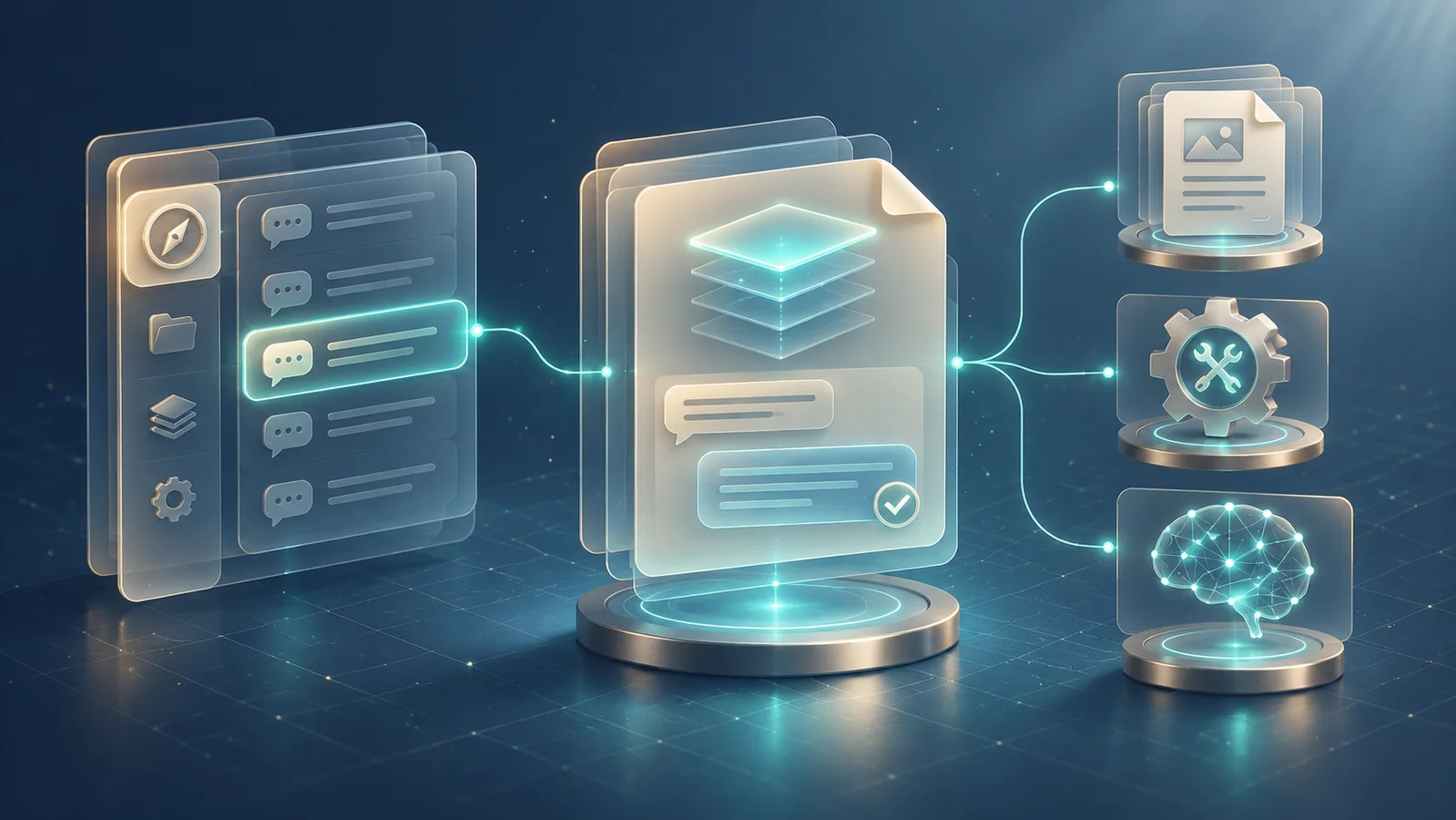
The Memory Layer tab then rebuilds all the version layers of this conversation and the journal events that explain them — with no approximate reconstruction.
Links between objects: the temporal graph
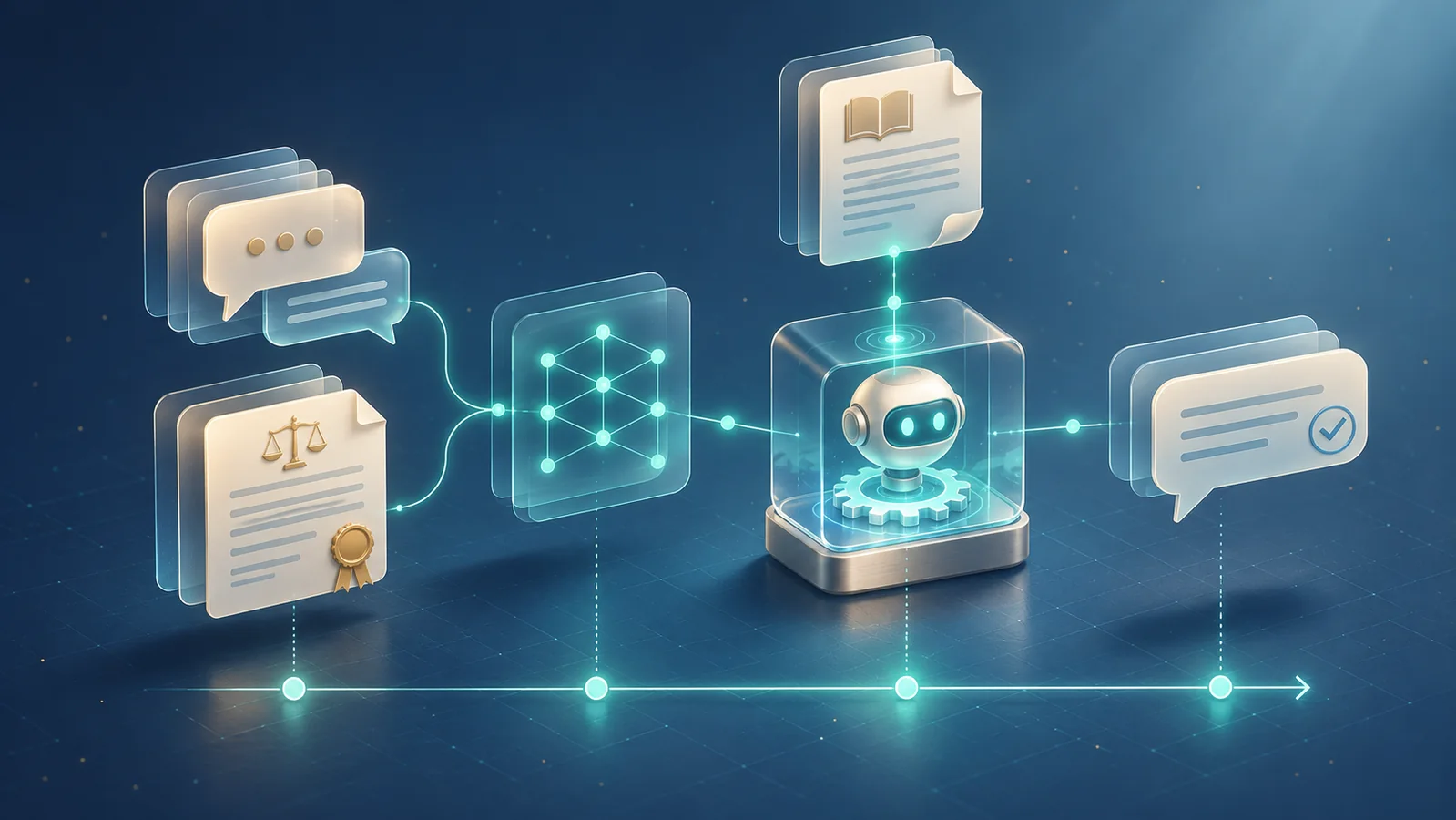
An agent's answer never stands alone. It relies on a precise version of the reference document, on the state of the relevant contract, and on the very execution of the agent that produced it. The temporal graph makes those links visible and verifiable.
What NOA had in memory: governed retrieval
The platform team's question is direct: which document did NOA rely on, and which version? Governed retrieval in KARL Core never returns a plain text excerpt: every result cites an exact resource and version — never the latest available version substituted for what was actually read.
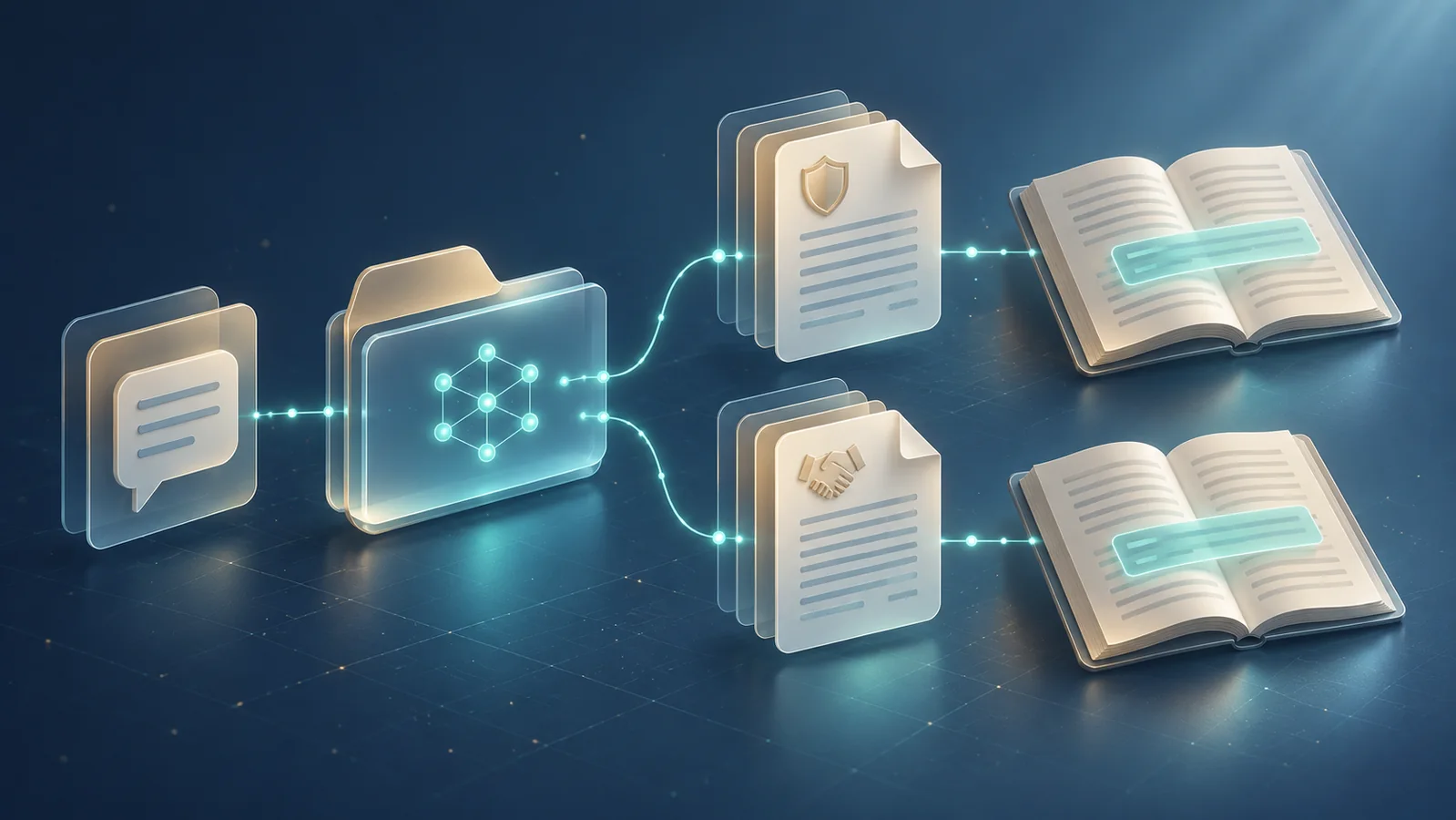
NOA did consult the version in force at the time of the answer, so this was not a retrieval error. The confusion came from elsewhere — the supervisor was comparing the answer to a version of the documentation that no longer applied that day.
Without the Memory Layer, this version-by-version distinction would have been impossible to establish with certainty.
What it changes, function by function
| Function | Challenge | Answer provided |
|---|---|---|
| AI platform / MLOps | Distinguish a retrieval error from a legitimate documentation change | Exact version of the document read, timestamped and logged, with no after-the-fact reconstruction |
| Support and supervision | Rule quickly on a disputed answer without rereading the whole application history | Reconstruction in a few screens: conversation, document, execution, in their exact state |
| Quality and continuous improvement | Identify whether a model or a prompt produces answers inconsistent with the documentation read | Exact citations (kind, stable_id, version) linking each answer to the content actually consulted |
| Technical management | Keep a reliable record of who — user or agent — produced each state of a resource | Actor and provenance (tool, instance) attached to every state, never inferred afterwards |
In short
The CONV-2026-33418 scenario illustrates three layers of a single foundation: the Memory Layer retains every state of the conversation without ever overwriting it, the temporal graph connects that state to the surrounding document and contract, and governed retrieval finds and cites precisely what the agent read before answering.
This verifiable memory is not only useful to answer a dispute: day to day, it lets teams diagnose an agent's answer with the same rigour as an application log, without depending on the model's memory or on a screenshot.
Quick glossary
| Term | Meaning |
|---|---|
| Memory Layer | Complete, immutable history of the versions of a resource and of the journal events |
| Temporal graph | Representation of the verifiable links between several resources within the same scope |
| Governed retrieval | Search where every result cites an exact resource and version, never substituted |
| Actor | Identity — human or agent — that produced a state or a journal event |
| Provenance | Tool and instance that produced a state, attached to the resource at the time of capture |
Ondaria Mutuelle, conversation CONV-2026-33418 and the NOA assistant are fictional. The screenshots come from the KARL MX interface running on a demonstration dataset: the mechanism shown is real, the data is not.